Stop one thing. Start with one moment it happens in.
You can't practise not doing something; on a good day nothing happens at all. What you can practise is what you do instead, and the place for that is the situation.

A plan, after a week
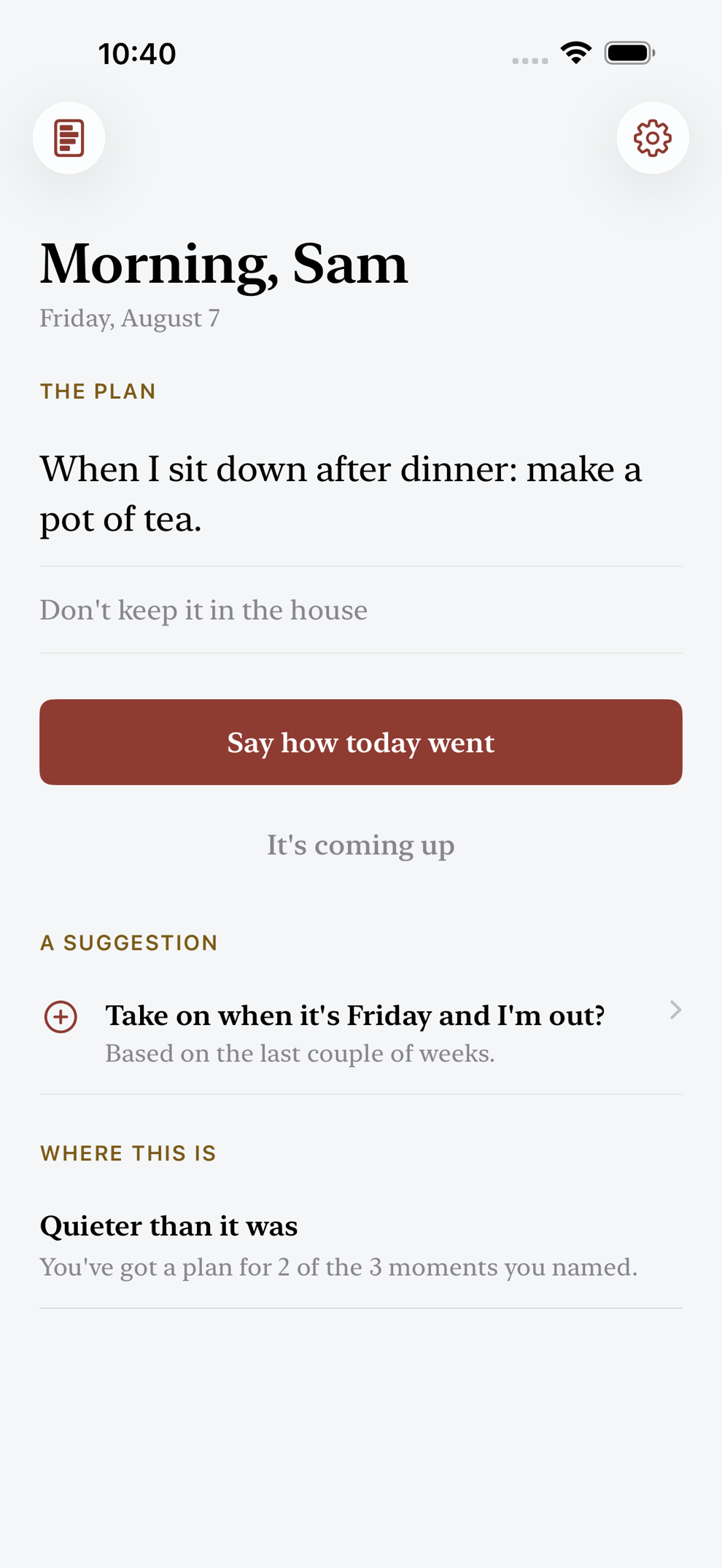
- When I sit down after dinner
- I make tea before I sit down
- In scope
- When I get in the car on my own
- The phone goes in the glovebox first
- Named
- When it's late and I'm still up
- The charger stays in the hall
- Named
You name the thing, then the situations it happens in, and for each one what you'll do there instead. Mini Breaks works on one of them at a time and brings the next in as the first goes quiet.
01
One moment first
Covering four situations at once means four chances a day to find there was no plan for this one. The rest stay named, and come in as the first goes quiet.
02
The plan gets bigger, not harder
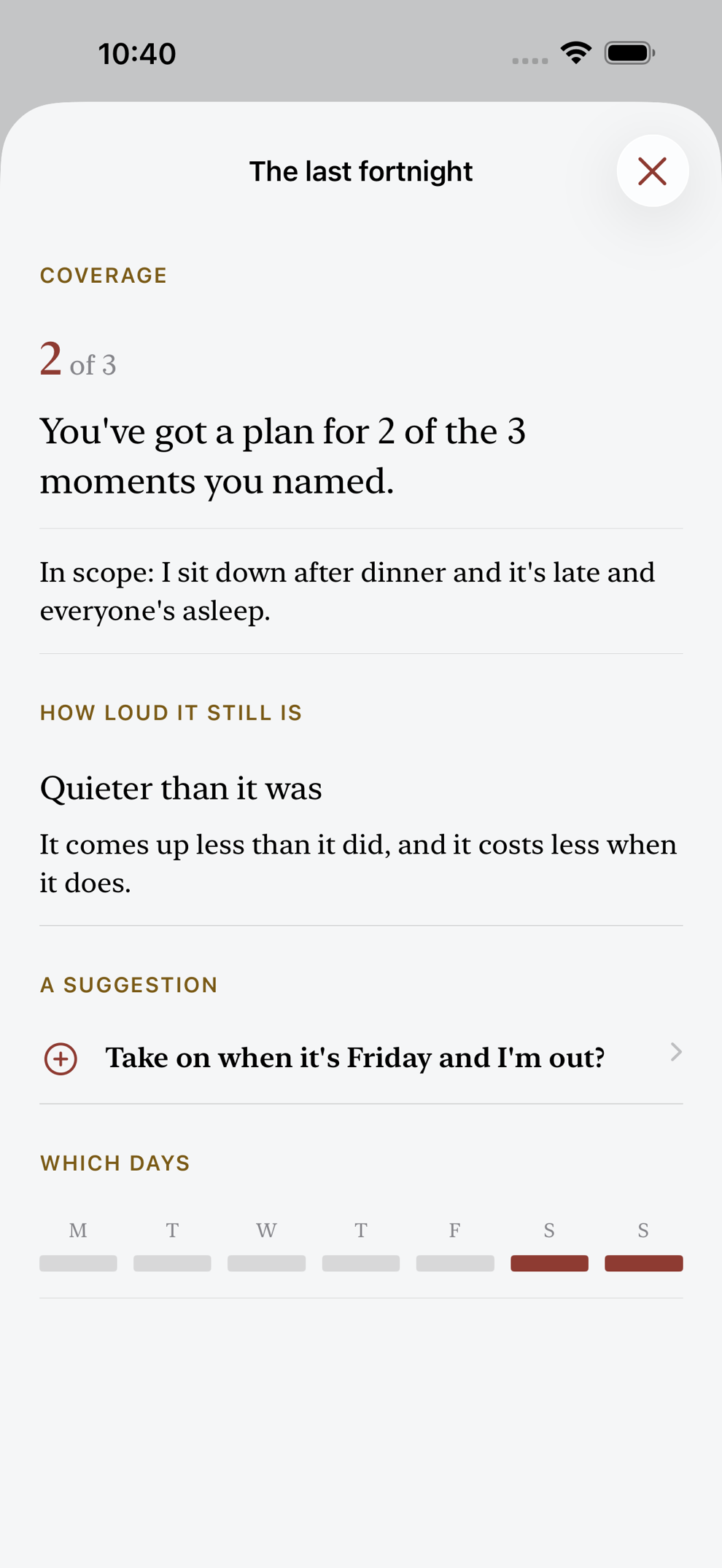
Progress here is more of your week covered, never more asked of you. Nothing in the app suggests wanting it less, or trying harder.
03
Two questions a day
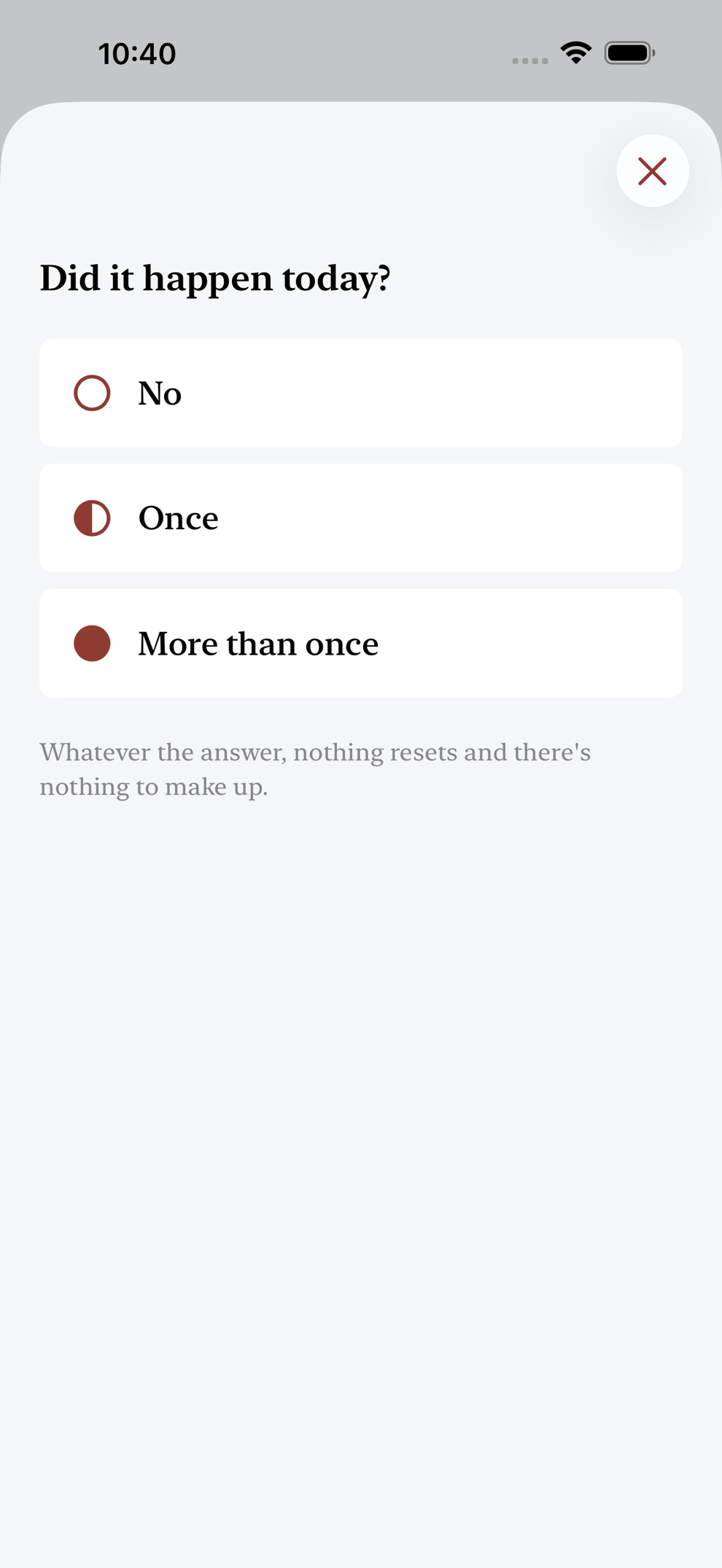
Did it happen, and how much did you want to. A day where nothing came up and a day you spent wanting it are completely different days, and one question can't tell them apart.
04
For the moment it's happening
One button says it's coming up. It gives you your own plan for the situation you're in, and nothing else. It is never counted, and nothing mentions it again.
05
No counter, ever
No day count, no reset, no score, no money saved. Nothing here can go back to zero. If it happens, the app changes the plan and asks you nothing about yourself.
06
When the plan needs changing
When one situation keeps coming up, Mini Breaks says what it noticed and suggests something: somewhere different to keep it, something else to do instead, a situation to leave alone for now. Nothing changes until you agree to it.
If you are working it out first
-
How to work out the situations it happens in
Note two things for four days. Most people find two to five situations, and one of them accounts for most of it.
-
Why a day counter can make stopping harder
A total can be lost, and it is lost on the day the tool most needed to be useful.
-
What to do when it happens again
Three questions that produce a change to a plan rather than a verdict about you.
-
One thing at a time
Drinking in the evening, smoking or vaping, scrolling, the phone at night, snacking, online shopping, biting your nails.
-
Choosing an app
What the apps in this category are built on, with prices read from the App Store and dated.
Questions
Does Mini Breaks count the days?
No. There is no day count, no streak, no reset and no score anywhere in it. Nothing in the app can go back to zero, and there is no day one to return to. What it describes instead is how much of your week has a plan attached to it and which situation is still the difficult one.
What does it actually ask me each day?
Two things: whether it came up, and how much you wanted to. Those are two rather than one because a day where nothing happened and a day you spent wanting it are completely different days, and a single yes or no cannot tell them apart.
What happens if it happens?
The app asks where you were and what had just finished. If the same situation keeps producing it, it says what it noticed and suggests one change to that situation — somewhere different to keep the thing, something else to do there, or leaving that situation alone for now. Nothing changes until you agree to it.
Can I work on more than one thing at once?
No, by design, and not more than one situation either. Covering four situations at once means four chances a day to find there was no plan for this one. The rest stay named and are brought in as the first goes quiet.
What does it cost?
£59.99 a year with one week free, or £9.99 a month with no free trial. There is no free tier and no advertising.
Does anything I write leave my phone?
No. The thing you are stopping, the situations, what you do instead and anything you type stay on the device. The app reports anonymous counts, such as whether setup was finished, and never a word you wrote.
Is Mini Breaks a treatment or a recovery programme?
No. It is not a treatment, not a programme and not a substitute for help, and it makes no health claim. Stopping some things suddenly is a medical matter — alcohol in particular — and that belongs with a doctor or a pharmacist.
What you write stays on your phone. The thing you're stopping, the situations, what you do instead and anything you write are kept on the device. The app does report anonymous counts (whether setup finished, whether a suggestion was accepted) and never a word you wrote. The privacy policy lists what that covers.
On newer iPhones the wording is done on the device. It is only the wording; what Mini Breaks suggests comes from your own answers.
Mini Breaks is not a treatment, a programme or a substitute for help. It makes no health claim, and it gives no advice about you.
If what you want is to start doing something rather than stop, this is the wrong app and there is a right one: Mini Loops, by the same people, builds one daily habit at a time. You cannot practise not doing something, which is why these are two apps and not one with a switch in it.